
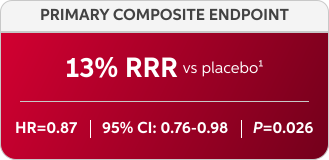
ARR: 2.1% (95% CI: 0.4-3.8)2
NNT: 47 (95% CI: 26-226)
to prevent a primary composite endpoint event at 42 months2


For US healthcare providers


For your adult patients with CKD associated with T2D
BY REDUCING CV RISK1
KERENDIA is the only nonsteroidal MRA indicated to reduce the risk of CV death, nonfatal MI, hospitalization for HF, sustained eGFR decline, and ESKD in adult patients with CKD associated with T2D.1
For your adult patients with CKD associated with T2D


BY REDUCING CV RISK1
KERENDIA is the only nonsteroidal MRA indicated to reduce the risk of CV death, nonfatal MI, hospitalization for HF, sustained eGFR decline, and ESKD in adult patients with CKD associated with T2D.1
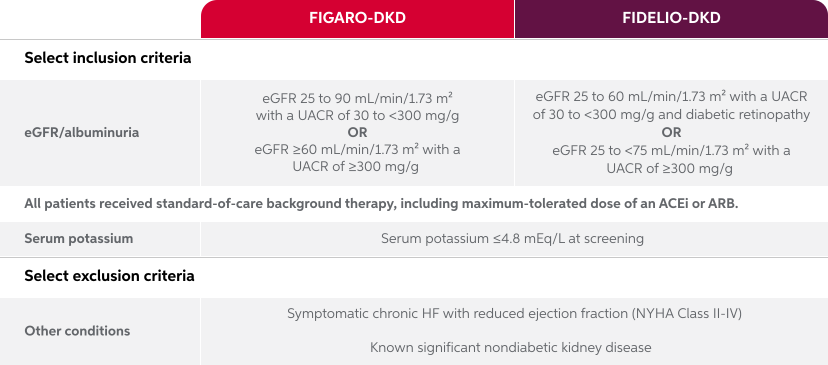
FIGARO-DKD (N=7352) and FIDELIO-DKD (N=5674) were randomized, double-blind, placebo-controlled, multicenter phase 3 trials with median follow-up periods of 3.4 and 2.6 years, respectively.1
In adult patients with CKD associated with T2D

Figaro-DKD
Trial
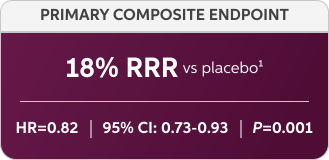
Primary composite endpoint consisted of CV death, nonfatal MI, nonfatal stroke, or HHF1
ARR: 2.1% (95% CI: 0.4-3.8)2
NNT: 47 (95% CI: 26-226)
to prevent a primary composite endpoint event at 42 months2
The treatment effect was generally consistent across subgroups, including1,2:

SGLT2i use at baseline

GLP-1 use at baseline

UACR at baseline

eGFR at baseline
There were too few patients on SGLT2i and GLP-1 to draw meaningful conclusions.1,2

fidelio-DKD
Trial
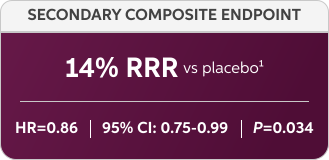
Key secondary composite endpoint consisted of CV death, nonfatal MI, nonfatal stroke, or HHF1
ARR: 2.4% (95% CI: 0.3-4.5)3
NNT: 42 (95% CI: 22-397)
to prevent a primary composite endpoint event at 36 months3
In FIDELIO-DKD, adult patients with CKD associated with T2D
Primary composite endpoint consisted of kidney failure,* sustained decline of ≥40% in eGFR, or renal death1
ARR: 3.4% (95% CI: 0.6-6.2)3
NNT: 29 (95% CI: 16-166)
to prevent a primary composite endpoint event at 36 months3
The treatment effect reflected a reduction in a sustained decline in eGFR of ≥40% and progression to kidney failure. There were few renal deaths during the trial1
The treatment effect was generally consistent across subgroups, including1,3:
eGFR at baseline
UACR at baseline

SBP at baseline

HbA1c at baseline
Renal outcomes from FIGARO-DKD
The key secondary composite outcome of kidney failure, sustained eGFR decline of ≥40%, or renal death occurred in 350 patients in the KERENDIA group (9.5%) and 395 patients in the placebo group (10.8%) (HR=0.87 [95% CI:
0.76-1.01]). The difference was not statistically significant.2
For adult patients with CKD associated with T2D
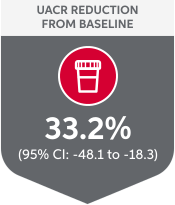
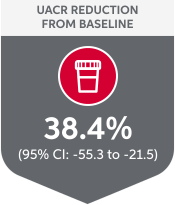
In an exploratory analysis of adult patients with CKD associated with T2D
In the FOUNTAIN observational, retrospective analysis of KERENDIA
A descriptive, single-cohort, retrospective analysis focused on new users of KERENDIA in the United States. FOUNTAIN data were sourced from the US electronic health records (OM1 Real World Data Cloud), which aggregated electronic health records with open claims and laboratory data.
FOUNTAIN population included patients diagnosed with CKD and T2D who initiated treatment with KERENDIA.
FOUNTAIN period spanned from July 9, 2021, to August 16, 2023; the cohort size was 15,948 patients; the median follow-up was 7.2 months.
A retrospective assessment based on health records may have missing or erroneous data entry.
Dosing information and background therapy were not collected as part of the study.
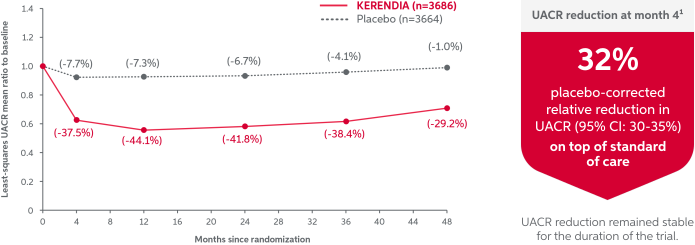
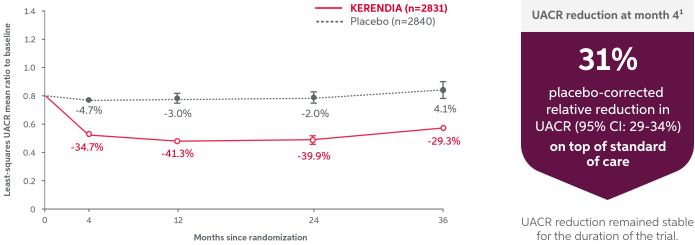
A total of 2137 patients had available UACR values at baseline and were included in the analysis of changes in UACR over time. The closest UACR measurement to baseline, 4 months and 12 months, respectively, was used. This was based on the following time windows6:
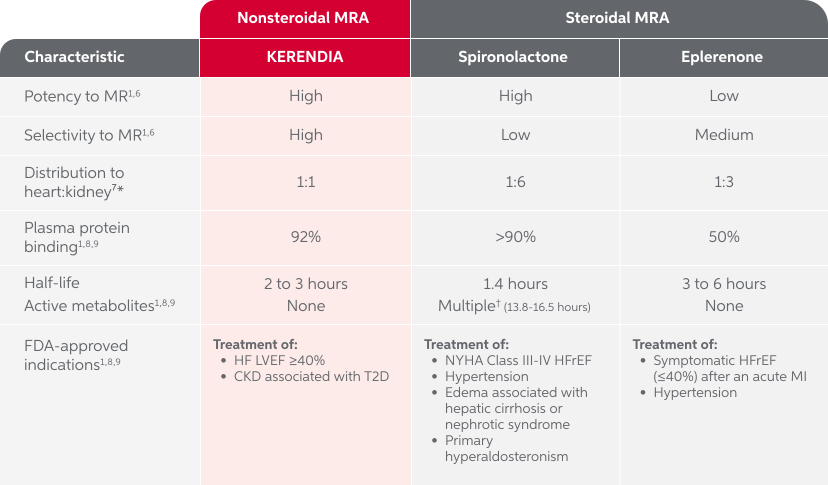
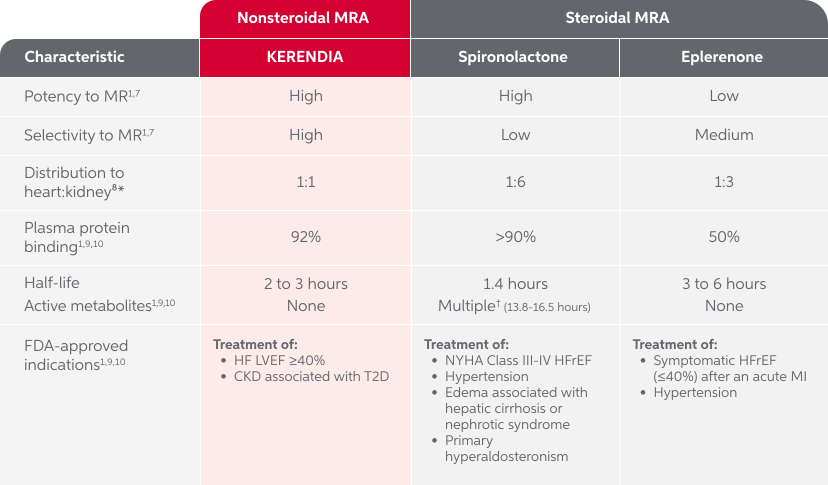
*Based on preclinical animal models. The clinical consequences of these characteristics are unknown.8
†Active metabolite (half-life) = canrenone (16.5 hours), 7-α-thiomethylspirolactone (13.8 hours), 6-β-hydroxy-7-α-thiomethylspirolactone (15 hours).9
This chart represents select PK/PD parameters. Please see the respective Prescribing Information for each product for complete product information. This chart does not imply a comparison of safety or efficacy data.
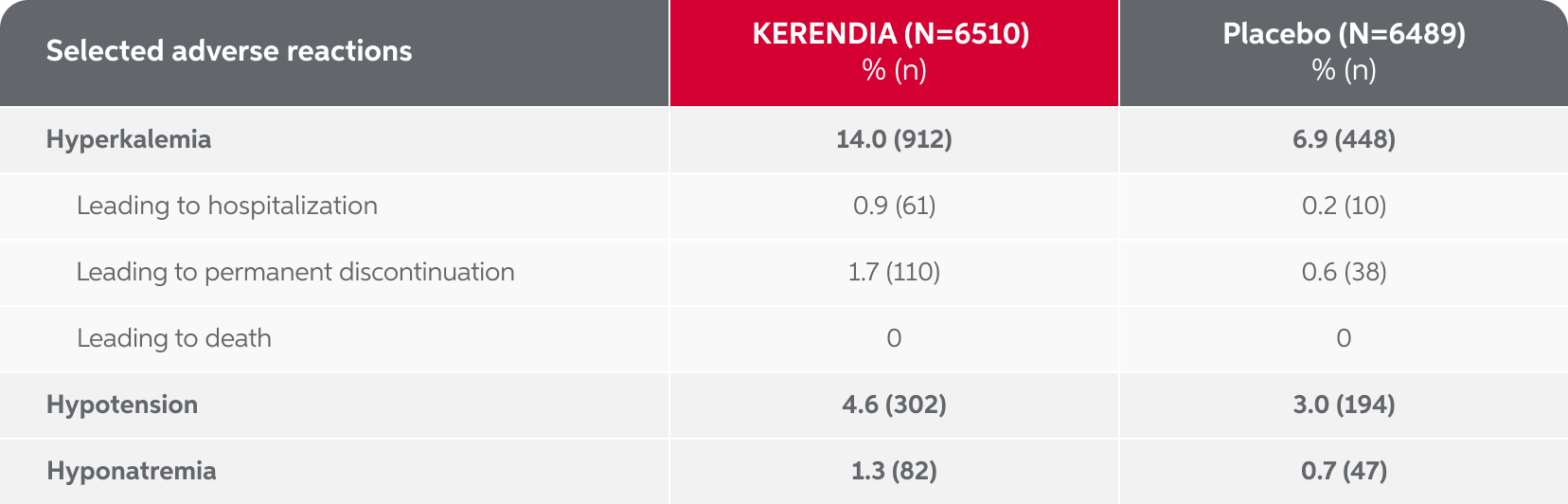
Evaluated in >13,000 adult patients with CKD associated with T2D taking KERENDIA or placebo
Adverse reactions reported in ≥1% of patients taking KERENDIA and more frequently than placebo (pooled data from FIGARO-DKD and FIDELIO-DKD)1,4
Use in pregnancy: There are no available data on KERENDIA use in pregnancy to evaluate for a drug-associated risk of major birth defects, miscarriage, or adverse maternal or fetal outcomes. Animal studies have shown developmental toxicity at exposures about 2 times those expected in humans. The clinical significance of these findings is unclear.1
Initiation of KERENDIA may cause an initial small increase in blood creatinine levels (mean change <0.1 mg/dL) and a small decrease in eGFR (mean change 2 to 3 mL/min) that occurs within the first 4 weeks of starting therapy and then stabilizes. These changes were reversible after treatment discontinuation. Initiation of KERENDIA may also cause a small increase in serum uric acid. This increase appears to attenuate over time.1
FIGARO-DKD and FIDELIO-DKD were randomized, double-blind, placebo-controlled, multicenter phase 3 trials with median follow-up periods of 3.4 and 2.6 years, respectively.2,3

CV outcomes trial
FIGARO-DKD1,2,11
(N=7328)
‡Majority earlier-stage (1-2) patients with CKD
(defined as eGFR ≥60 mL/min/1.73 m2 with albuminuria)

Renal outcomes trial
FIDELIO-DKD1,3,11
(N=5662)
§Majority later-stage (3-4) patients with CKD
(defined as eGFR <60 mL/min/1.73 m2 with albuminuria)
In both trials, patients were well managed with standard-of-care background therapy, including a maximum-tolerated dose of an ACEi or ARB, during a run-in period of 4 to 16 weeks.4
Trials had reciprocal endpoints (assessed in a time-to-event analysis)1
The CV composite endpoint consisted of CV death, nonfatal MI, nonfatal stroke, or HF hospitalization.
The renal composite endpoint consisted of kidney failure, sustained decline of ≥40% in eGFR, or renal death.
In adult patients with CKD associated with T2D
Treatment strategy is based upon individual patient needs and physician discretion.
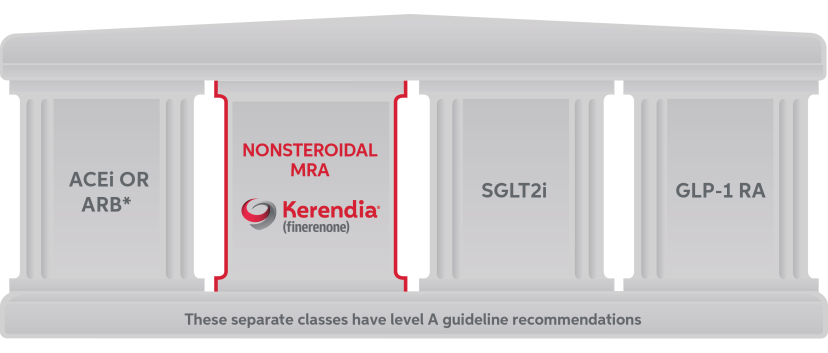
Multiple guidelines recommend KERENDIA1,11-18
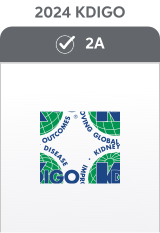
Recommendations with an A rating are based on large, well-designed clinical trials or well-done meta-analyses. Generally, these recommendations have the best chance of improving outcomes when applied to the population to which they are appropriate. Level 1A recommendations are based on a randomized, controlled clinical trial. Level 2A recommendations are based on secular trends, such as those from correlational studies.
*At maximum-tolerated dose.15
AACE=American Association of Clinical Endocrinologists; ACEi=angiotensin-converting enzyme inhibitor; ADA=American Diabetes Association; ARB=angiotensin receptor blocker; ARR=absolute risk reduction; CKD=chronic kidney disease; CV=cardiovascular; eGFR=estimated glomerular filtration rate; GLP-1=glucagon-like peptide-1; HbA1c=glycated hemoglobin; HF=heart failure; HF LVEF=heart failure with left ventricular ejection fraction; HFrEF=heart failure with reduced ejection fraction; HHF=hospitalization due to heart failure; HR=hazard ratio; KDIGO=Kidney Disease: Improving Global Outcomes; MI=myocardial infarction; MR=mineralocorticoid receptor; MRA=mineralocorticoid receptor antagonist; NNT=number needed to treat; NYHA=New York Heart Association; PD=pharmacodynamic; RA=receptor agonist; RRR=relative risk reduction; SBP=systolic blood pressure; SGLT2i=sodium-glucose cotransporter 2 inhibitor; T2D=type 2 diabetes; UACR=urine albumin-to-creatinine ratio.
KERENDIA (finerenone) is indicated to:
Hyperkalemia: KERENDIA can cause hyperkalemia. The risk for developing hyperkalemia increases with decreasing kidney function and is greater in patients with higher baseline potassium levels or other risk factors for hyperkalemia.
Measure serum potassium and eGFR in all patients before initiation of treatment with KERENDIA and dose accordingly. Do not initiate KERENDIA if serum potassium is >5 mEq/L. Measure serum potassium periodically during treatment with KERENDIA and adjust dose accordingly. More frequent monitoring may be necessary for patients at risk for hyperkalemia, including those on concomitant medications that impair potassium excretion or increase serum potassium.
Worsening of Renal Function in Patients with Heart Failure: KERENDIA can cause worsening of renal function in patients with heart failure. Rarely, severe events associated with worsening renal function, including events requiring hospitalization, have been observed.
Measure eGFR in all patients before initiation of treatment or with dose titration of KERENDIA and dose accordingly. Initiation of KERENDIA in patients with heart failure and an eGFR <25 mL/min/1.73 m2 is not recommended. Measure eGFR periodically during maintenance treatment with KERENDIA in patients with heart failure. Consider delaying up-titration or interrupting treatment with KERENDIA in patients who develop clinically significant worsening of renal function.