

Payer coverage for KERENDIA is stronger than ever: more than 303 million lives covered3
Access & Resources

THE FIRST TREATMENT APPROVED FOR YOUR ADULT PATIENTS WITH CKD ASSOCIATED WITH T1D IN 30+ YEARS1,2
KERENDIA reduces UACR, which is expected to slow CKD progression1,3
Payer coverage for KERENDIA is stronger than ever: more than 303 million lives covered4
Demonstrated strength of KERENDIA payer coverage
KERENDIA is covered for4:
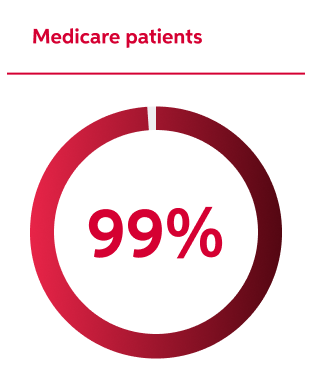
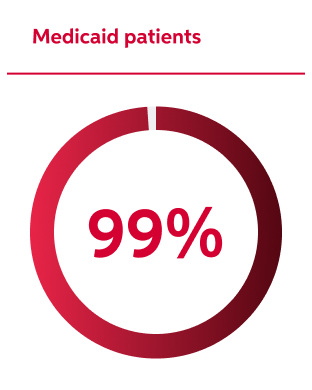
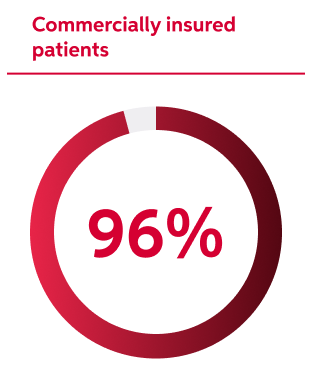
4 out of 5 patients with Medicare or Commercial coverage paid $12.50 or less per month for KERENDIA4*
*Source: Bayer analysis of IQVIA data for January 2025 through December 2025. Insured patient responsibility for a 30-day supply of KERENDIA was calculated by dividing the sum of patients’ OOP costs for the time frame by the number of KERENDIA tablets dispensed for the same time frame.4OOP=out of pocket.
Resources to help support patient access to KERENDIA
Prior Authorization (PA) and Appeal Checklist
A useful resource outlining best practices, key documentation, and criteria needed for prior authorizations and appeal submissions.
Sample Letters of Medical Exception
Downloadable, templated letters providing clinical justification for KERENDIA when it is not included on a patient’s formulary or prescription drug list.
Sample Letters of Appeal
Downloadable, templated letters designed to support appeal efforts following a PA or medical exception denial. The letter can be tailored to address specific denial reasons and include supporting evidence, as needed, or requests by the health plan.
Sample Letters of Medical Necessity
Downloadable, templated letters describing why KERENDIA is medically necessary in cases where a patient may not meet their health plan’s full prior authorization or step therapy criteria for coverage, or when KERENDIA is not covered under the patient’s health plan. The Letter of Medical Necessity can be submitted along with the Letter of Appeal.
INDICATIONS:
KERENDIA (finerenone) 10 mg, 20 mg tablets is indicated to:
- reduce the risk of sustained estimated glomerular filtration rate (eGFR) decline, end-stage kidney disease, cardiovascular death, non-fatal myocardial infarction, and hospitalization for heart failure in adult patients with chronic kidney disease (CKD) associated with Type 2 diabetes (T2D)
- reduce urinary albumin-to-creatinine ratio (UACR), which is expected to reduce the risk of sustained estimated glomerular filtration rate (eGFR) decline and end-stage kidney disease in adults with CKD associated with Type 1 diabetes (T1D)
IMPORTANT SAFETY INFORMATION
CONTRAINDICATIONS:
- Hypersensitivity to any component of this product
- Concomitant use with strong CYP3A4 inhibitors
- Patients with adrenal insufficiency
WARNINGS AND PRECAUTIONS:
Hyperkalemia: KERENDIA can cause hyperkalemia. The risk for developing hyperkalemia increases with decreasing kidney function and is greater in patients with higher baseline potassium levels or other risk factors for hyperkalemia. Measure serum potassium and eGFR in all patients before initiation of treatment with KERENDIA and dose accordingly. Do not initiate KERENDIA if serum potassium is >5 mEq/L.
Measure serum potassium periodically during treatment with KERENDIA and adjust dose accordingly. More frequent monitoring may be necessary for patients at risk for hyperkalemia, including those on concomitant medications that impair potassium excretion or increase serum potassium.
MOST COMMON ADVERSE REACTIONS:
- The adverse reactions reported in ≥1% of patients on KERENDIA and more frequently than placebo were hyperkalemia (14% vs 6.9%), hypotension (4.6% vs 3%), and hyponatremia (1.3% vs 0.7%).
DRUG INTERACTIONS for KERENDIA 10 mg, 20 mg:
- Strong CYP3A4 Inhibitors: Concomitant use of KERENDIA with strong CYP3A4 inhibitors is contraindicated. Avoid concomitant intake of grapefruit or grapefruit juice.
- Moderate and Weak CYP3A4 Inhibitors: Monitor serum potassium during drug initiation or dosage adjustment of either KERENDIA or the moderate or weak CYP3A4 inhibitor, and adjust KERENDIA dosage as appropriate.
- Strong and Moderate CYP3A4 Inducers: Avoid concomitant use of KERENDIA with strong or moderate CYP3A4 inducers.
USE IN SPECIFIC POPULATIONS:
- Lactation: Avoid breastfeeding during treatment with KERENDIA and for 1 day after treatment.
- Hepatic Impairment: Avoid use of KERENDIA in patients with severe hepatic impairment (Child Pugh C) and consider additional serum potassium monitoring with moderate hepatic impairment (Child Pugh B).
Please see the full Prescribing Information for KERENDIA.